James Webb Space Telescope: el plan de esta semana
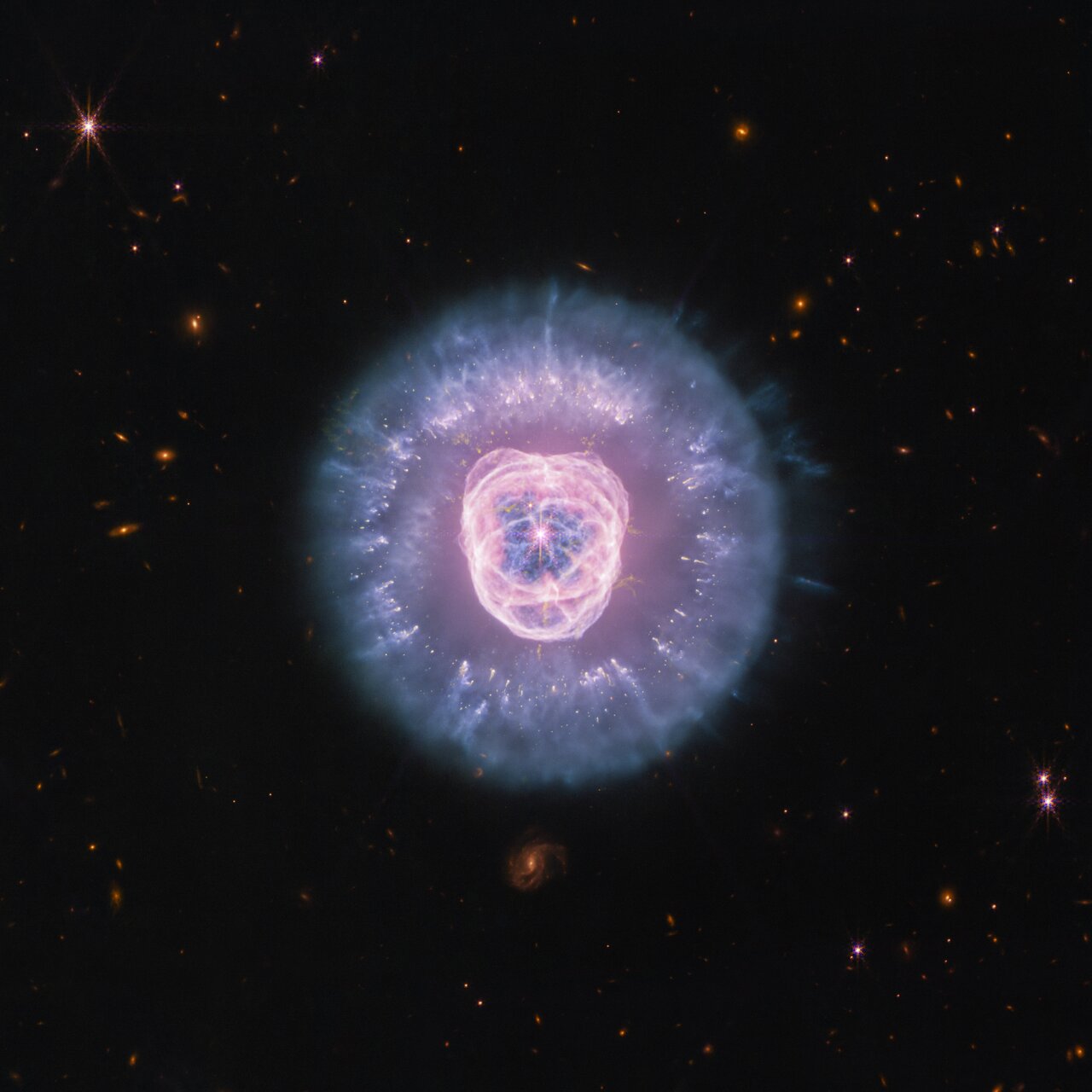
Esta es una imagen de Webb
NGC 2392 (Lion Nebula)
Nombre anterior: Eskimo Nebula
Webb ve el infrarrojo, que es calor y no luz que tu ojo pueda detectar, así que aquí no había color que fotografiar. Cada color de esta imagen representa una de las longitudes de onda que Webb registró, y así es como la luz invisible se hace visible.
Qué representa cada color
Un micrómetro (µm) es una milésima de milímetro. Tu ojo deja de ver alrededor de 0,7, así que todas las longitudes de onda siguientes quedan más allá.
- Azul: 1,15 µm (NIRCam)
- Cian: 1,87 µm (NIRCam)
- Amarillo: 2,12 µm (NIRCam)
- Naranja: 3,35 µm (NIRCam)
- Rojo: 10 µm (MIRI)
Publicada: 2026-08-10
Crédito de la imagen: NASA, ESA, CSA, STScI. Image Processing: A. Pagan (STScI). CC BY 4.0
Ver esta publicación en esawebb.orgLeer la descripción completa de la ESA sobre esta imagen (en inglés)
Planetary nebula NGC 2392, also called the Lion Nebula, against the black background of space. The nebula is in the centre, circular in shape, and looks like a male lion’s head. In the very centre is a small, pinkish-white circle with eight-point diffraction spikes, a white dwarf star. Surrounding the star are light purple-pink cavernous bubbles and shell-like rings. The bubbles and shells collectively form an oval with two small, wide arcs near the top, reminiscent of a lion’s face and its ears. What appears to be extended outward from the lion’s face is a thick ring of purple-blue material. The width of the ring is consistent throughout and resembles a mane. The area closest to the lion’s face looks cloudy, while the edges of the mane look like there are clumps of dust with comet-like tails and strands. In the background are distant galaxies and stars. Some galaxies appear as small yellow and orange points of light and others with visible spiral structures. A couple of the stars have diffraction spikes.
Crédito del texto: ESA/Webb, CC BY 4.0
Esto es un plan, no una señal en directo
Ninguna fuente pública indica hacia dónde apunta Webb en este momento. Lo que ves abajo es el programa que el STScI publicó por adelantado. Parte de él no ocurrirá: los objetivos de oportunidad, como una supernova repentina, pueden desplazar observaciones planificadas con poco margen.
Since the schedules do not take into account unforeseen events, including some target of opportunity observations, it is possible that the actual executed observations will differ from those planned.Cargando el programa de esta semana.